

Best Time to Visit Grand Canyon
Those who have lived nearby enjoy the chilly, windy spring, the bustling summer fun, an awe-inspiring August thunderstorm, the perfect weather of autumn, and, maybe especially, the gorgeous snow on the winter canyon after the crowds are gone.
No matter when you visit, Grand Canyon will be its astonishing self. So, any time at all is the best time to visit the Grand Canyon. Really.
Spring
At 7,000 feet (2,134 meters), the South Rim doesn’t feel like spring until mid-March. Even then, three inches of snow can fall. The first wildflowers peek out from bare patches: wild candytuft, tiny purple filaree, and stemless daisy.


Morning paths and sidewalks can be icy — watch your step. The spring breezes begin and persist through June. A forceful wind might draw you behind a grove of ponderosa pines. But the canyon is ever there beside you — its complexity beckons your eye, makes you forget the wind.
In April and May the weather is brisk, crisp, clear, and dry. Spring break brings families and their energetic kids. Some snow lingers, giving lovely views — white on the red rocks. In Grand Canyon Village the restaurants fill up, but the east rim drive to Desert View has many famous viewpoints with room to breathe. A Clark’s Nutcracker might startle you with its insistent calls — a jay with no blue.
Summer
Grand Canyon — like most of Arizona — has five seasons. Summer splits in two: hot, dry June through early July, then the monsoon thunderstorms from mid-July through August and sometimes into early September. The odds are great for nice days throughout any month.


On any monsoon day you might experience the memorable sight of a faraway thunderstorm creeping up the canyon. At the rim, you are warm and dry in the sun. When the rain finally reaches you, duck into a shop, hotel, visitor center, or museum. After the usually-brief rains, the sun comes out and the rain-washed day turns cool for your evening stroll.
A word about lightning: in a storm, stay back from the canyon’s edge. Lightning tends to strike the rim first. If you see someone with their hair standing on end, tell them to run — not walk — away from the rim.
Most monsoon days have hours of nice weather, usually in the morning. Storms are localized — you can drive along the South Rim to find a break in the clouds. Bring your camera.
Fall
Fall may be the most underrated time to visit. The crowds thin as families return to school. Summer temperatures ease into the low 80s and mid-70s at the South Rim. The light turns golden.
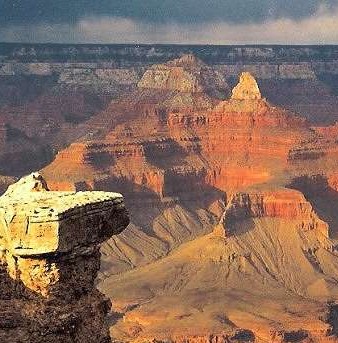
This is a good time for the trails. The Kaibab Trail is steep but rewards you with Ooh-aah Point less than a mile down — aptly named. A half-mile farther you reach the rust-red sandstone and shale ledges of the Hermit Formation, where there is a restroom and an exhibit: fossil fern leaves that grew here 280 million years ago.
The Bright Angel Trail is the other classic option — well-maintained, with restrooms at 1½ miles and at 3 miles. Views are majestic. At the rest stops you might take off your shoes and gaze down at Havasu Gardens, 4½ miles below. A mule train might pass you; stand quietly to the inside of the trail while they go by.
Winter
Some say winter is the best time of all — still, beautiful, never crowded. Snow typically arrives in November or December and the rim can stay snow-covered through mid-February.
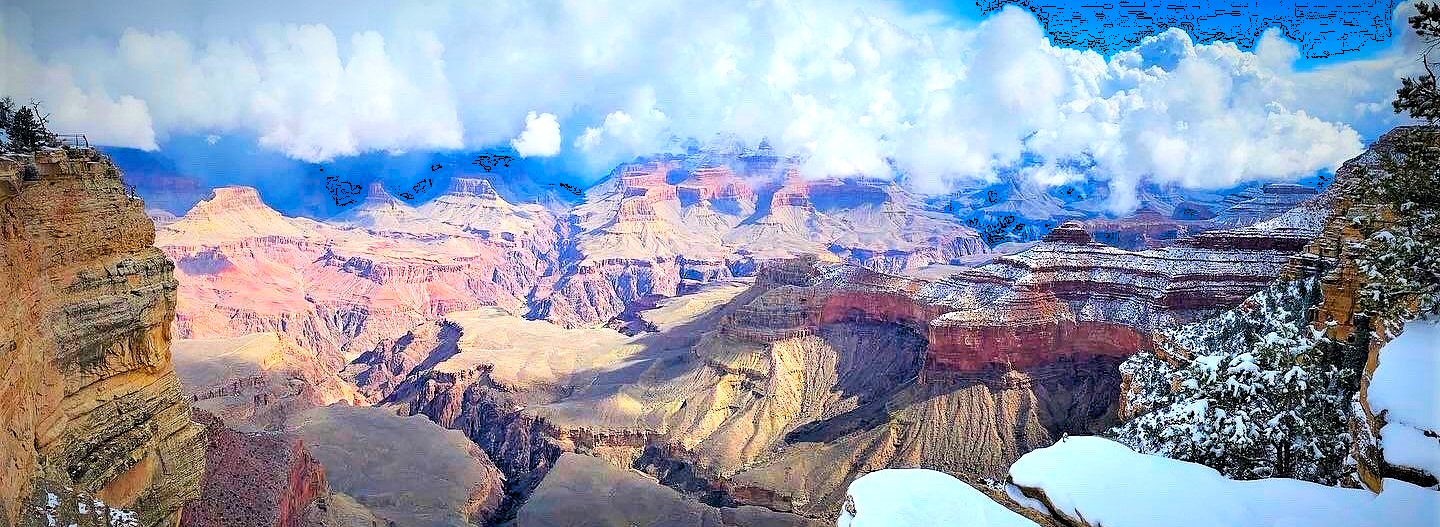
If you visit in December through February, a few days may bring road closures on the east rim drive to Desert View for ice and snow — but the National Park has snowplows and the road clears quickly. The riskier drive is the road north from Williams to the park after a snowfall. Check the weather report before you leave.
Sedona, at lower altitude, stays warmer with little or no snow. Staying there in winter is smart: if a blizzard rolls in, you have a beautiful place to wait it out, and you can save the canyon drive for safer conditions.
So, What Is the Best Month?
Timing a Grand Canyon visit for the weather is a gamble you are likely to win. The vast majority of days are tolerable to perfect. But the wind and rain are capricious. There are even a couple of days per year when a temperature inversion fills the canyon with clouds from below — a white-out. The canyon itself disappears from view entirely. You won’t see it at all.
If you can stay for at least three days, exquisite views are practically guaranteed in any season. Three days gives you time for the Grand Canyon Village, the free shuttle buses to Hermit’s Rest, the drive east to Desert View, and a hike or a stroll along the Rim Trail. A Canyon Dave Tour fits naturally into any of those days — and gives you the geological story to make every viewpoint mean something.
Ready to experience the Grand Canyon in any season?
See Our Tours and BookFrequently Asked Questions
What is the best month to visit Grand Canyon?
Honestly, there is no bad month. September and October are often considered the sweet spot — crowds thin after summer, temperatures are comfortable, and the low sun brings out soft shadows. Spring offers wildflowers and fresh snow on red rocks. Winter is peaceful and uncrowded. Summer is busy but the monsoon storms are spectacular. Every season has its own magic.
How hot does it get at Grand Canyon in summer?
The South Rim sits at 7,000 feet, so it stays much cooler than the desert below — summer highs average around 80–85°F (27–29°C). The inner canyon, however, can reach 110°F (43°C). Day hikes into the canyon in summer require careful planning, early starts, and plenty of water.
Does it snow at Grand Canyon?
Yes — and it is absolutely beautiful. Snow typically arrives in November or December, and the rim can stay snowy through February. The contrast of white snow against the red and orange canyon walls is stunning. Many visitors say winter is their favorite season at the canyon precisely because of the snow and the smaller crowds.
How crowded is Grand Canyon in summer?
Spring Break and Summer are the busiest seasons, especially April and June through August. Arriving before 9:00 AM dramatically reduces entry gate wait times. The east rim drive to Desert View is often far less crowded than the main Village area and offers equally spectacular views.
What should I wear to Grand Canyon?
Layers, at any time of year. Even in summer the rim can be cool in the morning and evening. In spring and fall bring a warm jacket — temperatures drop quickly after sunset. In winter dress for cold and possible snow. Comfortable walking shoes are essential. Sun protection — hat, sunscreen, sunglasses — matters year-round at this altitude.